Quarterback
The quarterback is the player who touches the ball on nearly every offensive snap. He takes it from the center, decides where it goes, and leads the team on the field. No other position carries as much responsibility for the result of a play.
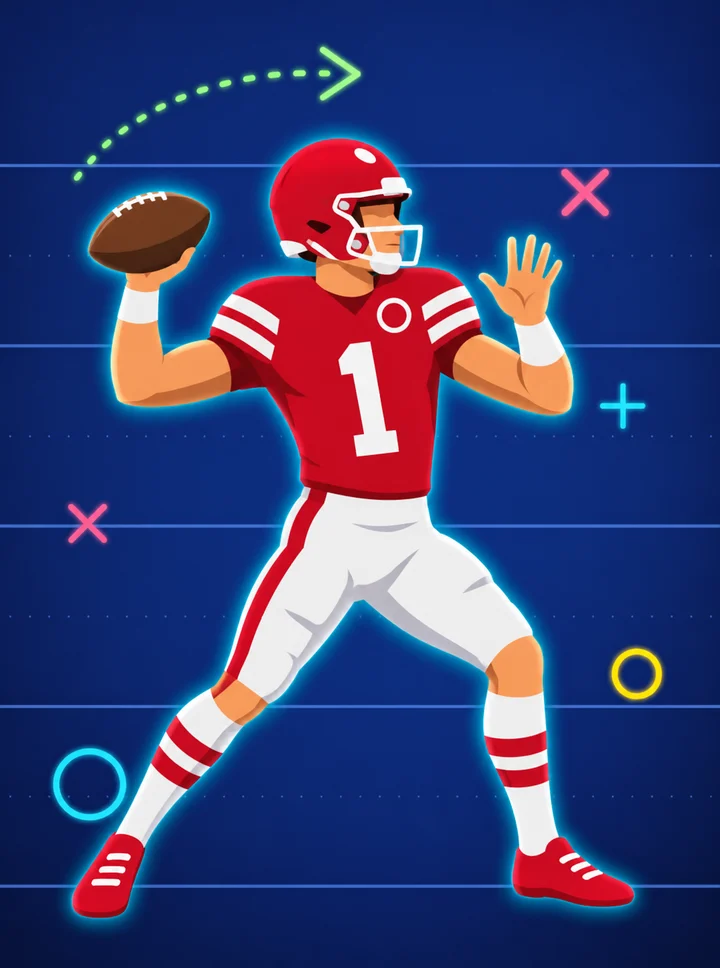
What he does
- Calls the play in the huddle, or receives it from the coach by radio
- Reads the defense before the snap and changes the play at the line (an audible) if needed
- Takes the snap under center or in the shotgun, a few yards back
- Hands off, throws or keeps the ball and runs
- Manages the clock, the snap count and the pace of the offense
On running plays
Hands the ball to the running back, or keeps it himself on options and designed quarterback runs. After a handoff he often fakes a pass to hold the defense in place.
On passing plays
Drops back (three, five or seven steps depending on the play), finds his target by going through a set order of reads, and throws before the pass rush arrives. Under pressure he must choose between throwing the ball away, scrambling, or taking the sack.
What makes a good one
Arm strength and accuracy, quick decisions, pocket awareness and the poise to stay calm when the pocket collapses. Mobility helps, but reading the defense is what separates the best.
How he lines up
The quarterback lines up in one of three ways. Under center, he stands directly behind the center and takes the snap hand to hand, which suits power runs and play-action. In the shotgun, he stands about five yards back and receives a longer snap, which gives him a clearer view of the defense. In the pistol, he is about four yards back with a running back directly behind him. Before the snap he scans the safeties and linebackers, because their positions tell him which coverage is coming.
Techniques and common mistakes
Key techniques are the three-step, five-step and seven-step drops, a high release point, and stepping up in the pocket instead of backing away from pressure. Common mistakes include staring at one receiver, which lets safeties read his eyes, forcing a throw into coverage, holding the ball too long, and ignoring a free rusher. Protecting the ball matters as much as completing passes: throwing the ball away or taking a sack is usually better than an interception.
Animated play
Blue circles are the team with the ball. X marks the other team. The yellow oval is the ball.
- The quarterback lines up right behind the center and waits for the snap.
- He takes the ball, drops back a few steps and looks at the defense to see who is open.
- His offensive line holds the pass rush for a few seconds, which gives him time to throw.
- He throws the ball to the open receiver, who catches it for a gain.