Coaching staff
Who runs a football team on the sideline, from the head coach down to the position coaches, and what each of them does.
Head coach
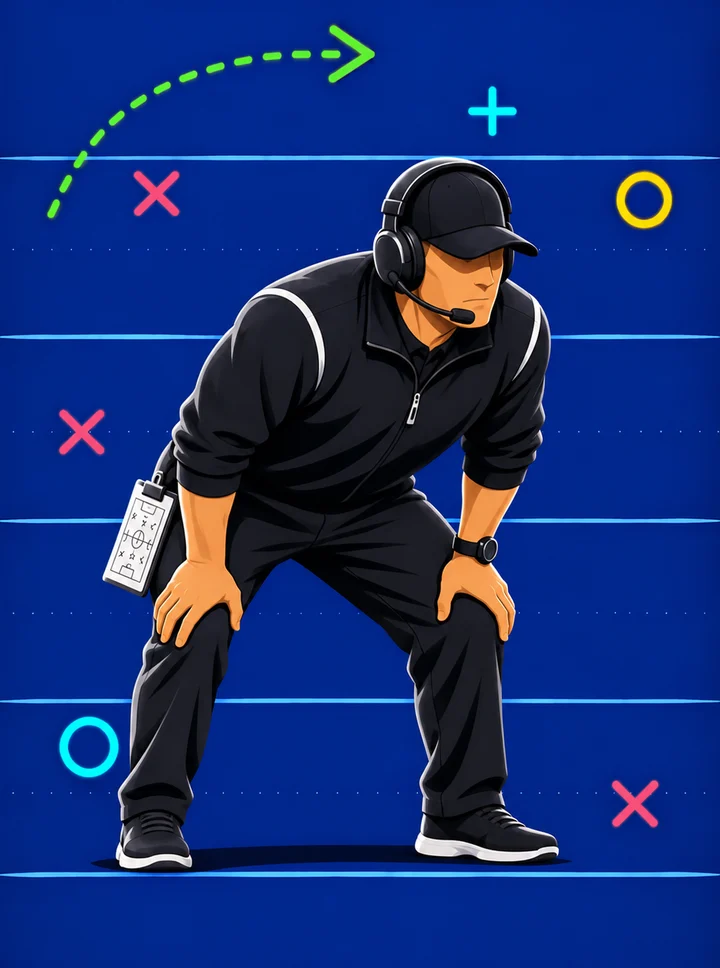
The head coach is the leader of the whole football operation on the sideline. He hires the coordinators and the position coaches, sets the team’s culture and style of play, and makes the biggest decisions on game day: whether to go for it on fourth down, try a two-point conversion, call a timeout, or throw the red flag for a coach’s challenge. He also runs the team meetings, works with the general manager on the roster and speaks for the team to the media. Some head coaches also call the offensive or defensive plays, but many give that job to a coordinator and focus on the game as a whole.
Offensive coordinator
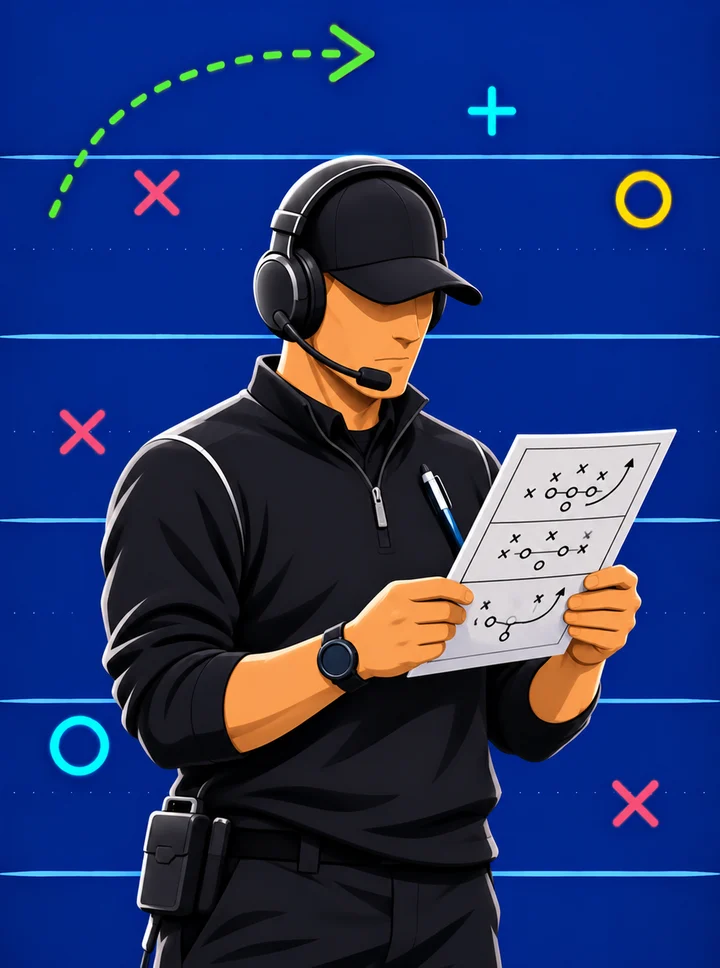
The offensive coordinator builds the offense: the playbook, the formations, the passing and running schemes, and the weekly game plan. He studies film of the opponent’s defense to find weak points, then prepares a script of the first plays. During the game he usually calls the plays and sends them to the quarterback by radio, and he makes changes at halftime. He works most closely with the quarterback, the quarterbacks coach and the offensive line coach, because the passing and blocking plans must fit together.
Defensive coordinator
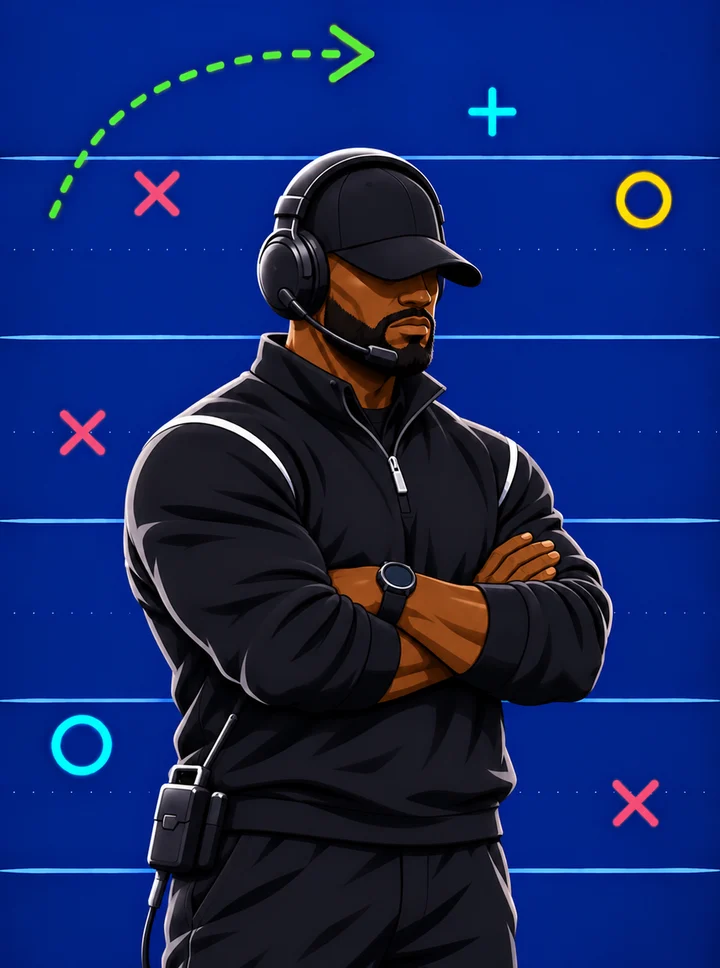
The defensive coordinator designs the defense: the fronts, the coverages, the blitzes and the plan for each opponent’s offense. He decides how to stop its best player, whether to play more man or zone coverage, and when to send extra rushers. During the game he calls the defense, and the call reaches the field through a player with a radio in his helmet, usually a linebacker or a safety. Between series he talks to the players on the sideline to adjust to what the offense is doing.
Special teams coordinator
The special teams coordinator runs the kicking game: kickoffs, kick returns, punts, punt returns and field goals. He works with the kicker, the punter and the long snapper, and he builds the other units from players who also play on offense or defense. He plans the formations, the blocking and the coverage lanes, and teaches the details, such as how the gunners release against a double team. Special teams decide field position, and a single blocked kick or a long return can change a game.
Quarterbacks coach
The quarterbacks coach works daily with the quarterback on his footwork, his reads and the mechanics of his throws. He reviews film with him, prepares him for the opponent’s coverages and blitzes, and helps build the passing part of the game plan with the offensive coordinator. On game day he often sits beside the quarterback on the sideline and goes over the last series with him.
Offensive position coaches
The running backs, receivers, tight ends and offensive line coaches each teach one group. They run the individual drills, coach the techniques of each position, grade the players on film and tell the coordinator who is playing well. The offensive line coach has an especially big task, because five players must work as one unit and learn the protection and run-blocking calls together.
Defensive position coaches
The defensive line, linebackers and defensive backs coaches (often split into cornerbacks and safeties coaches) do the same job on the other side of the ball. They teach tackling, pass-rush moves, coverage techniques and the alignments for each call. The defensive backs coach must make sure that every defender in the secondary knows the coverage on each play, since one mistake can leave a receiver wide open.
Quality control and analysts
Quality control coaches and analysts are the staff behind the staff. They break down film, collect statistics and tendencies on opponents, prepare scouting reports and video clips for meetings, and often check the team’s own habits. Their work helps the coordinators spot what an opponent does on third down, in the red zone or after a certain formation.
Strength and conditioning coach
The strength and conditioning coach designs the training for the whole team: weight-room work, speed and agility, and recovery. Together with the medical staff, he manages the workload during the season so that players stay healthy and fresh.
General manager
The general manager is not a coach, but he works closely with the head coach. He builds the roster through the draft, free agency and trades, manages the salary cap and signs the players. In some organizations the head coach has a strong say in these decisions, and in others the general manager has the final word. Both report to the owner.